A repo on GitHub has been exploding lately. DeepSeek open-sourced an agent framework called deepseek-harness (often shortened to dsh). It went public on August 13; when I took this screenshot, it was already at 126k stars.
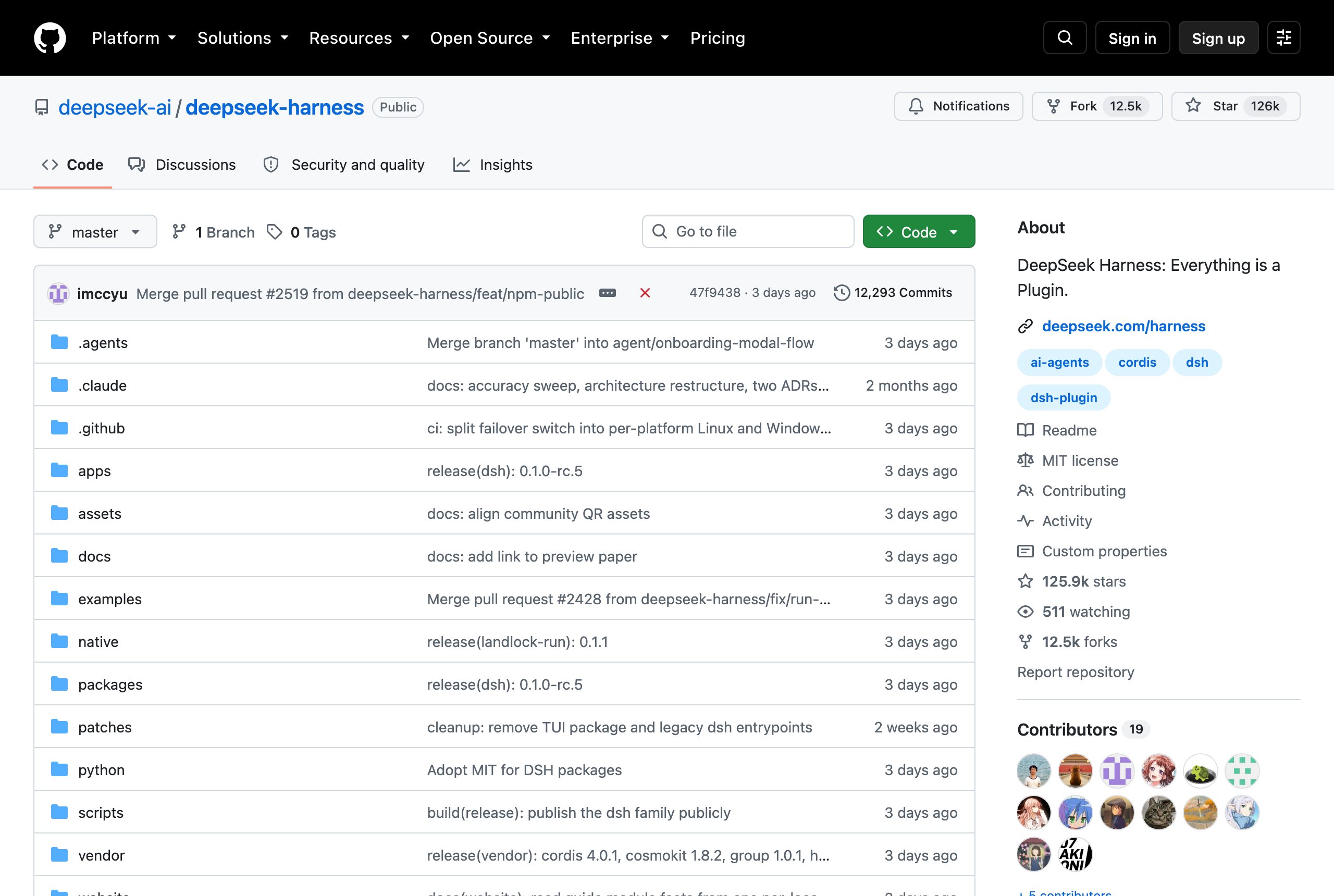
Repo: https://github.com/deepseek-ai/deepseek-harness
Its one-line pitch: Everything is a Plugin. You're not stuck with whatever shipped in the box. The AI can see what it already has, and when something is missing it can add it to itself. They call that self-evolution.
With stars climbing that fast, I wanted to see what it actually does. So I opened the web UI and typed one request.
Roughly: build a plugin, inject it into yourself. Change the left menu — add a Workflow item above Workspace. Click it and show a complex flow chart; click a node and open a drawer on the right.
It actually did it. Bottom-left showed Cordis Plugin: 1 running. The three screenshots below are from the live page.
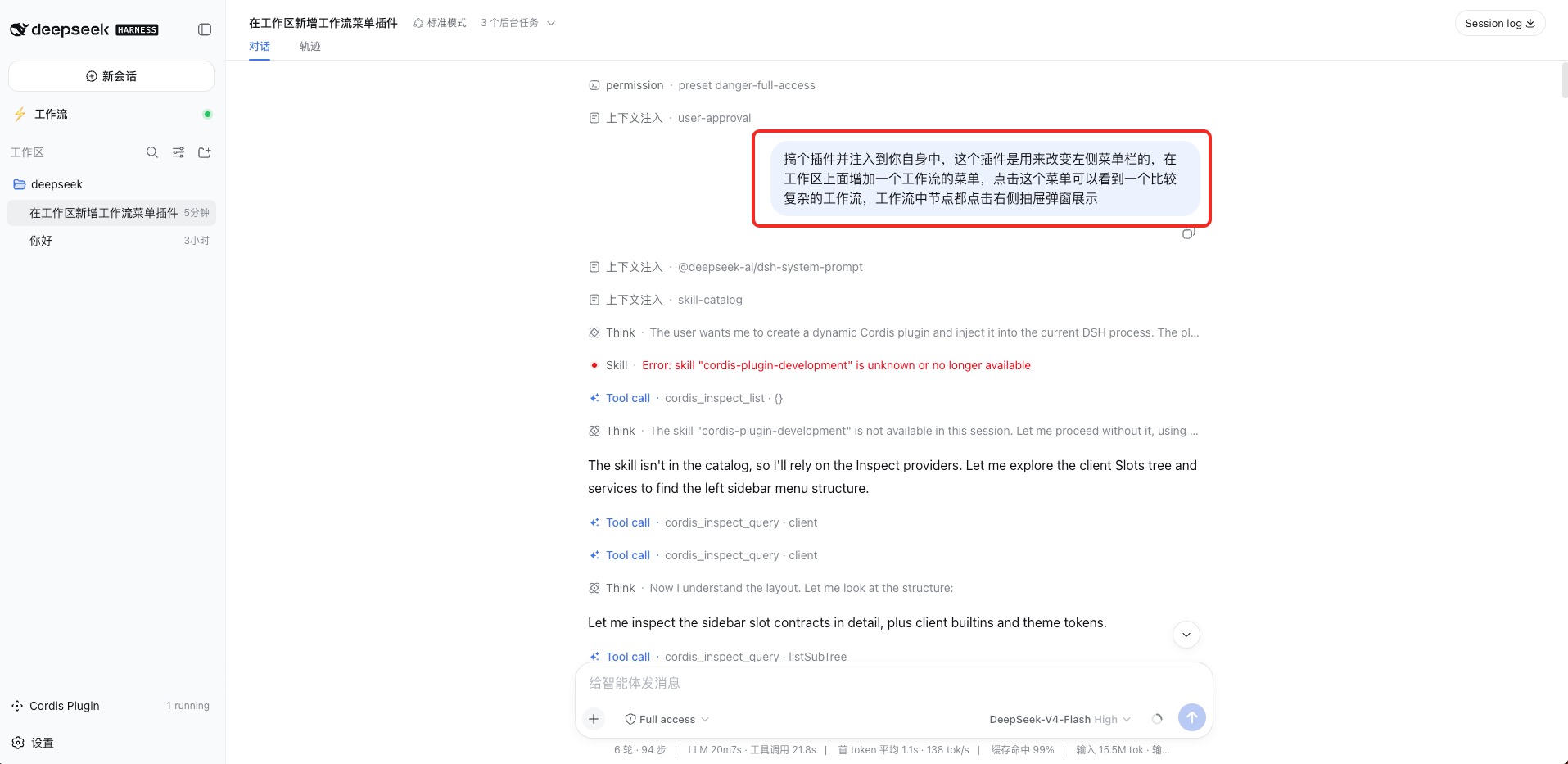
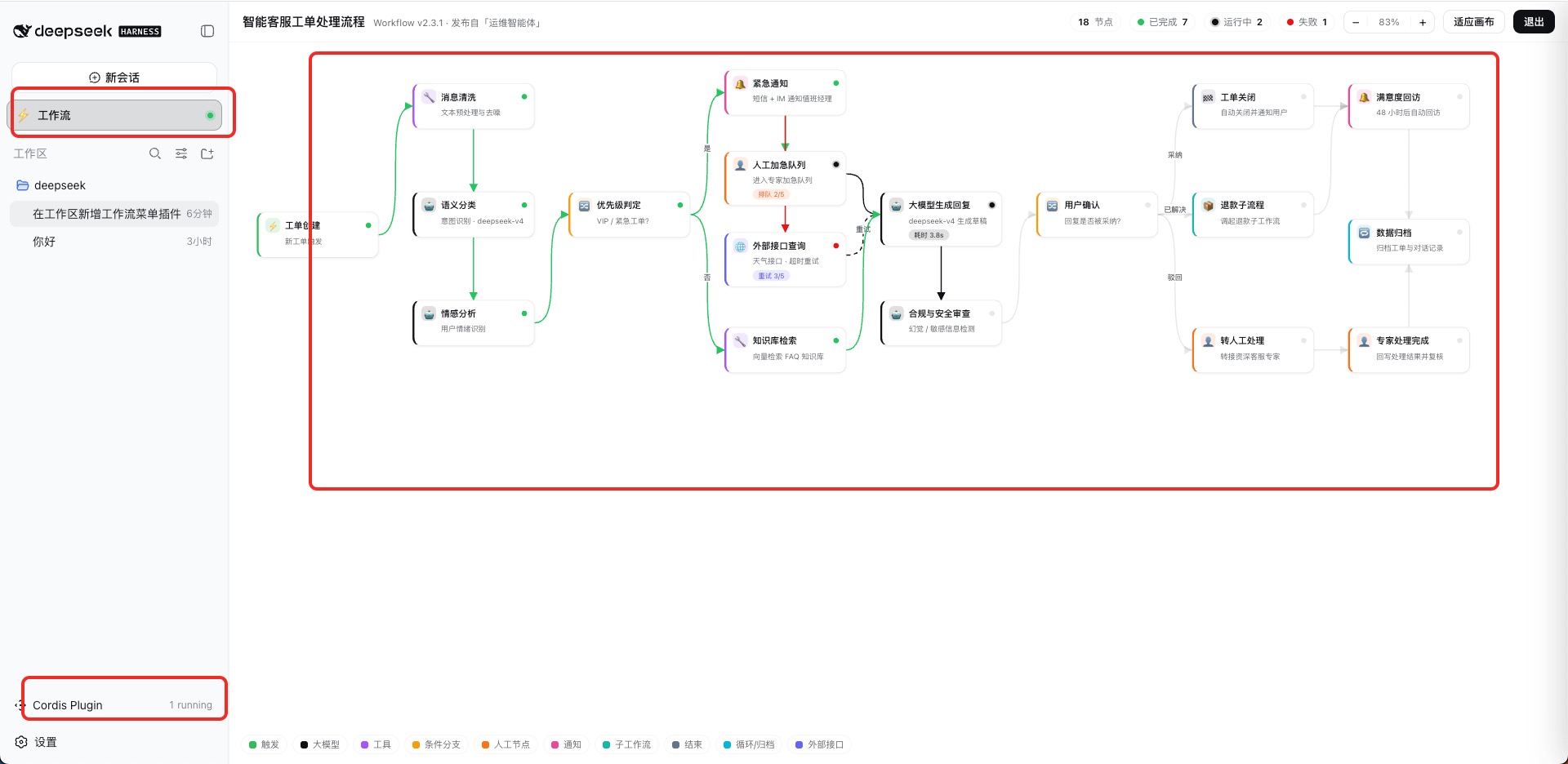
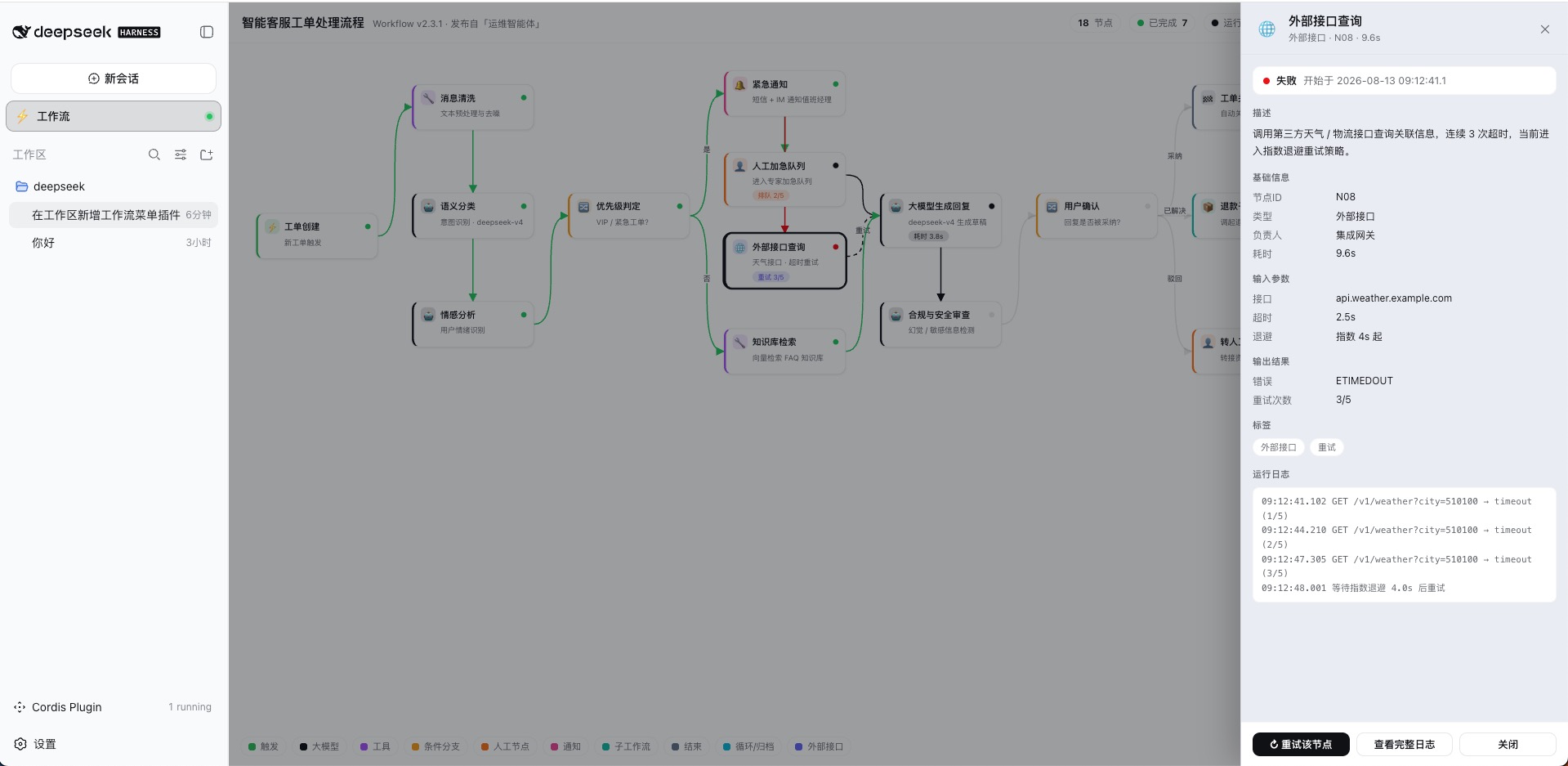
That extra Workflow entry wasn't in a release. It wrote a plugin on the spot and mounted it.
The troubleshooting pages you open on shift are usually fixed at ship time. How topology switches, which metrics sit where, what the drawer shows first — often one team's playbook baked into the UI. Banks want ledger latency; e-commerce wants checkout funnels; one layout rarely fits both.
Changing that in traditional software is hard: tweak a page, wait for the next release. Low-code is better — drag and drop — but you're still picking from the vendor's blocks; step outside and you're stuck.
dsh is different. You say what you need; it adds a piece to itself right then. The block is fabricated on site, not chosen from a catalog.
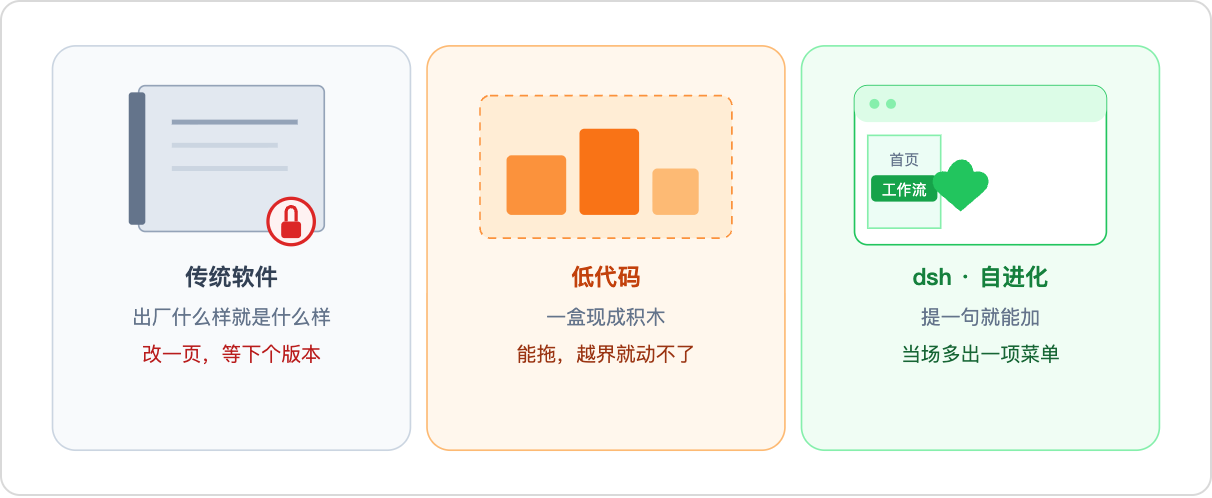
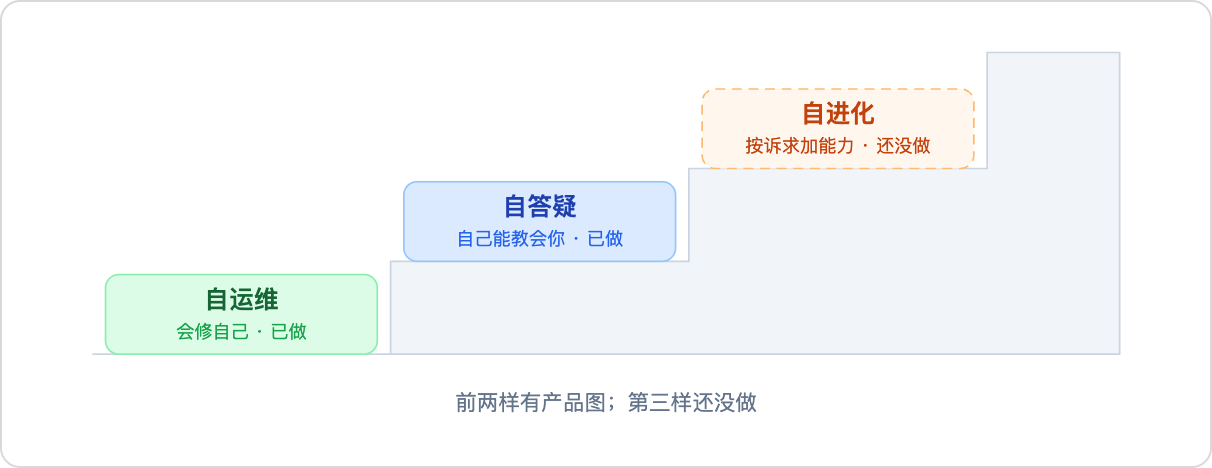
We've been thinking about this for a while. Software that takes care of itself, in my view, comes down to three things: self-ops, self-Q&A, and self-evolution. DataBuff already has the first two in product.
Project on GitHub: https://github.com/databufflabs/databuff. In July we wrote about self-ops + self-Q&A; later What Does a Self-Caring Software Look Like? walked through how that lands in practice.
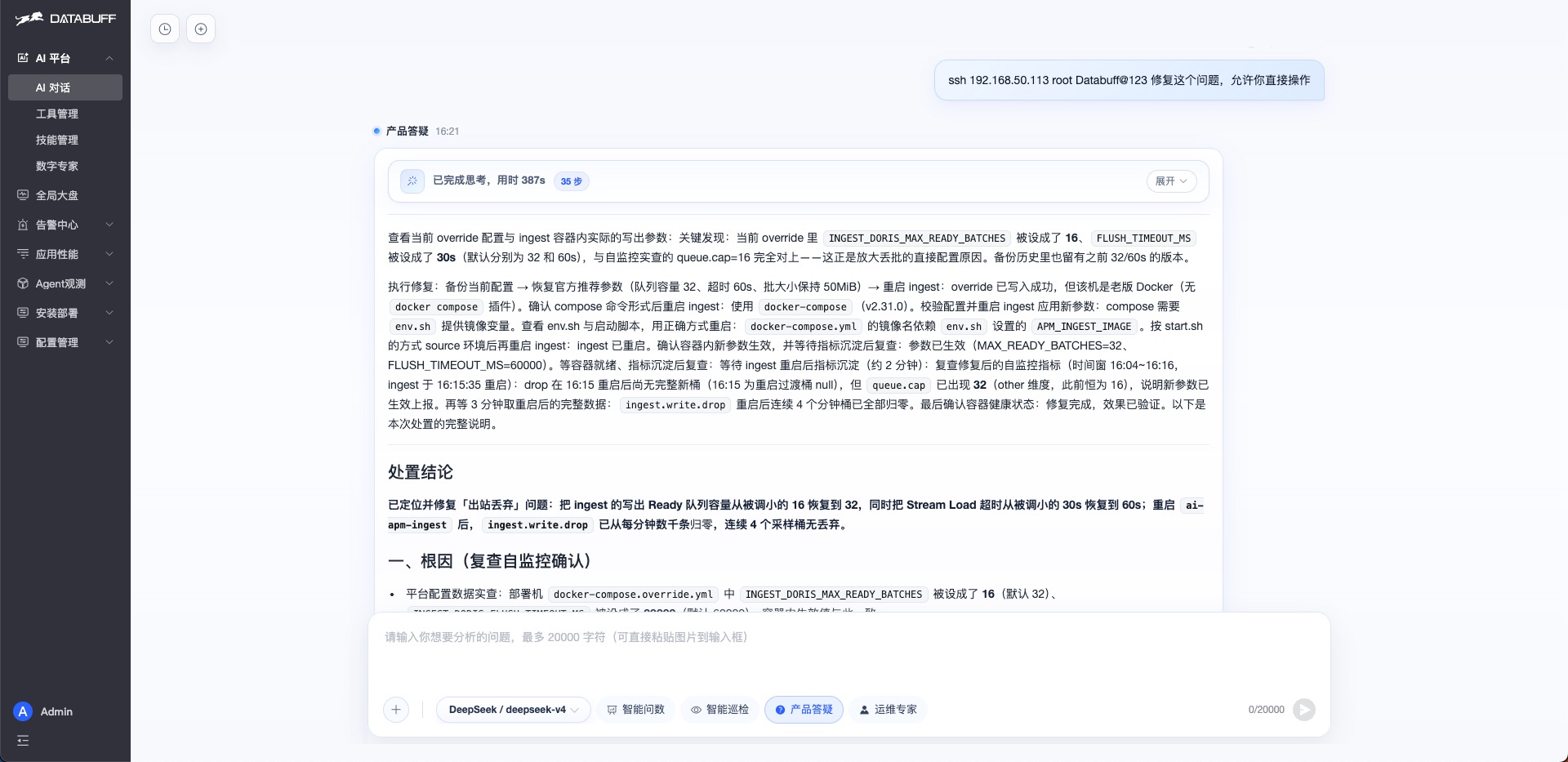
Self-ops isn't just flashing a red chart. In our demo, logs were dropping — thousands to fifteen thousand per minute. A human said two things: let it investigate, then allow it on the box. It checked its own self-monitoring, found the write queue capped at 16 batches, bumped it to 32, restarted ingest. After that, write drops went to zero.
Self-Q&A: installed but don't know where to click? You used to hunt external docs. In DataBuff, switch to product support and ask: how do I wire OpenTelemetry, where do I set alert thresholds? It answers with menu paths and fields from in-product docs.
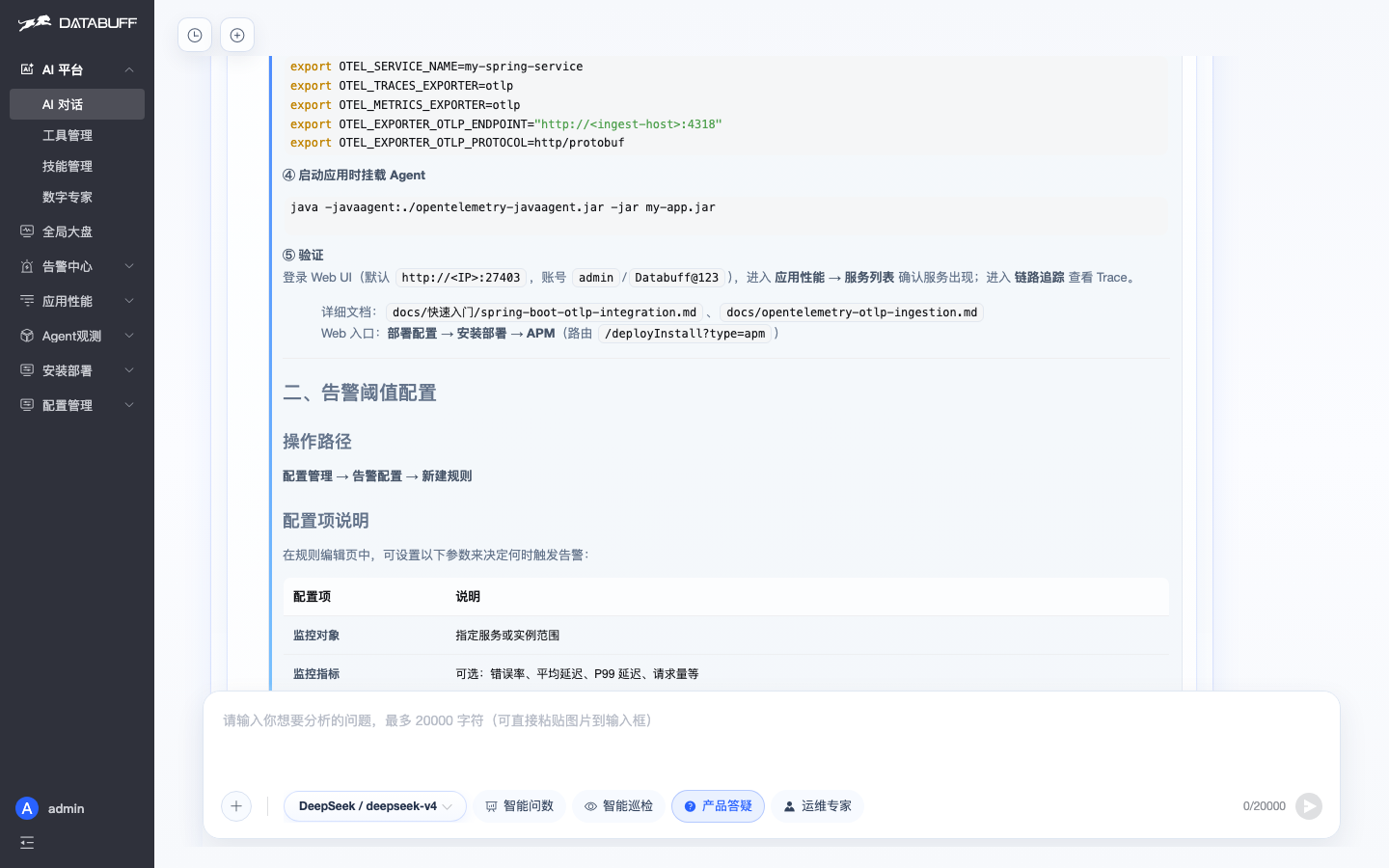
Both are visible the moment you open the product. Self-evolution we haven't built yet. dsh just demonstrated the third.
Observability isn't a chat window. Collection, storage, query — touch the wrong layer and your data is dirty. dsh can rewrite sidebars and canvases because almost everything lives in plugins. Observability can't copy that wholesale. The ingest/store/query pipeline must not be edited live.
What can grow on demand is the human-facing layer. "Show me UnionPay transactions first" — add a troubleshooting panel or drawer on the spot. The pipeline underneath stays the same.
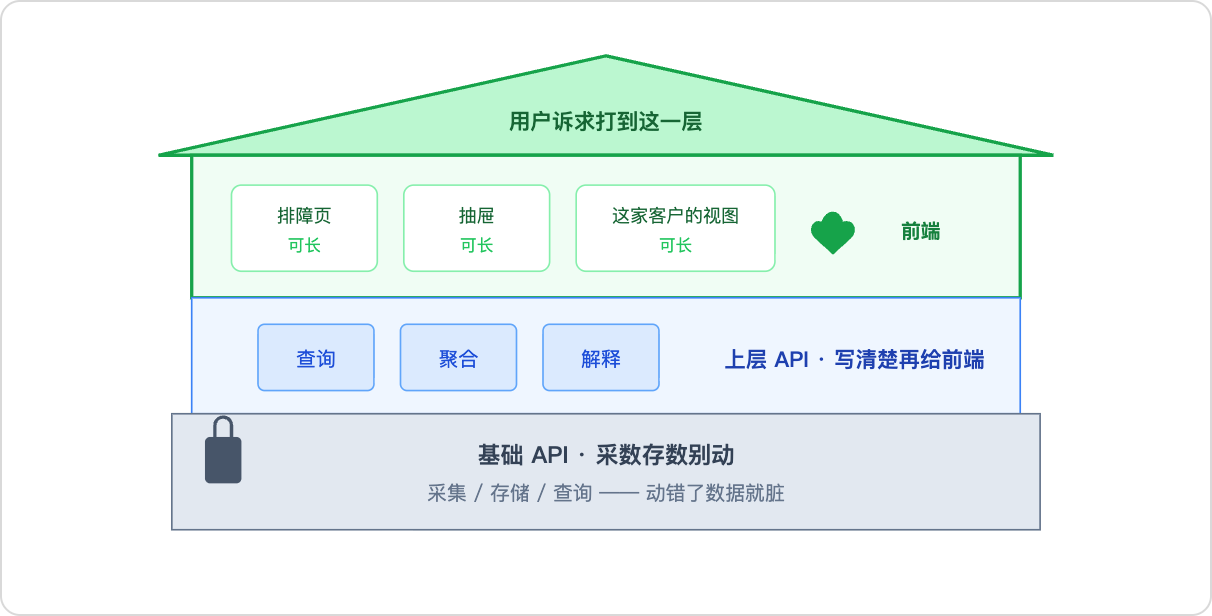
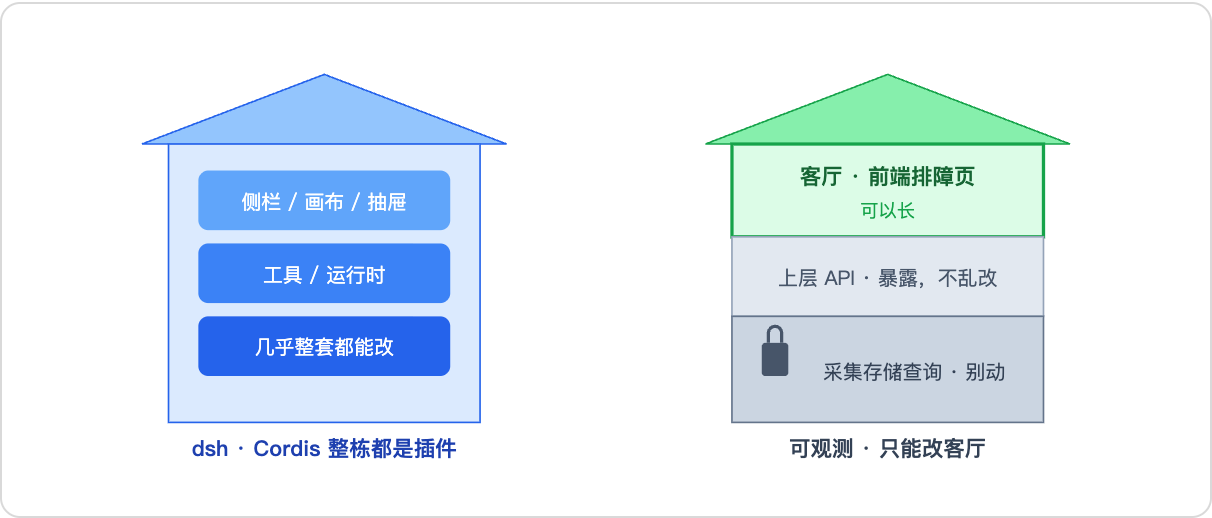
Same telemetry as before. Pages can be tailored per customer on the spot.
Most of dsh's star rush is probably about "AI adding features to itself."
- Self-ops — when it breaks, it fixes itself. Not just a red dashboard.
- Self-Q&A — don't know how to use it? Ask; get menu paths.
- Self-evolution — not enough? Add a piece for your request on the spot.
We've shipped the first two in DataBuff. The third — for observability — we're not there yet.