Beyond SkyWalking: Open-Source APM Worth Watching in 2026
SkyWalking · Open-Source APM · OpenTelemetry · DataBuff · Distributed Tracing
Bottom line first: SkyWalking remains a mature option. If your team is pushing OTel unification or needs AI Q&A/MCP, consider an OTLP-native three-component APM in a parallel POC—this article maps a 2026 open-source APM watchlist to three team profiles.
1What Is APM? (30-Second Version)
APM (Application Performance Monitoring) continuously collects service latency, error rate, throughput, and call relationships to answer "which service is slow and where did the error originate?". Modern open-source APM typically collects traces via OpenTelemetry and sends them to backends over OTLP (gRPC 4317 / HTTP 4318).
Before selecting, confirm whether you need a full APM with "traces + metrics + topology" or distributed tracing alone—the latter usually cannot support on-call and architecture reviews.
◆ ◆ ◆
2Three Team Profiles
In the open-source APM ecosystem, SkyWalking represents a mature full-stack path; the sections below group by need so you can self-identify
Typical needs: The organization requires a single OpenTelemetry SDK / Collector on the application side, with replaceable, self-hosted backends.
Multi-language microservices; unwilling to maintain proprietary agents per backend Existing SkyWalking estate; want new services on the OTel standard path
Typical needs: Data must stay on-premises, but you do not want a long ops checklist of OAP + ES + many components.
Engineering self-ops without a large SRE team Want an 8 GB memory demo to convince leadership that self-hosted APM is feasible
Typical needs: On-call engineers want natural-language trace/metric queries, or to connect APM into Cursor / Claude MCP workflows.
Comfortable with traditional consoles, but slow-request root-cause analysis still takes too long Exploring AI-native ops, not a bolt-on chat box disconnected from telemetry
◆ ◆ ◆
3Capability Match: What Each Profile Should Check First
| Team Profile | Priority Capabilities | Common Open-Source Paths | Evaluation Tip |
|---|---|---|---|
| OTel Unification | OTLP-only ingest; Collector ecosystem compatibility | SkyWalking (multi-format + OTLP), DataBuff (OTLP-native) | Run a 2-week comparison with Collector dual-write |
| Self-Host Ops Relief | Component count, install script, minimum resources | SkyWalking (full capability, heavier stack), DataBuff (three components) | Measure POC time with the install script |
| Intelligent Operations | Conversational Q&A, MCP, multi-agent | SkyWalking AI Pipeline (ML), DataBuff (AI-native APM) | Test Q&A quality on real slow traces |
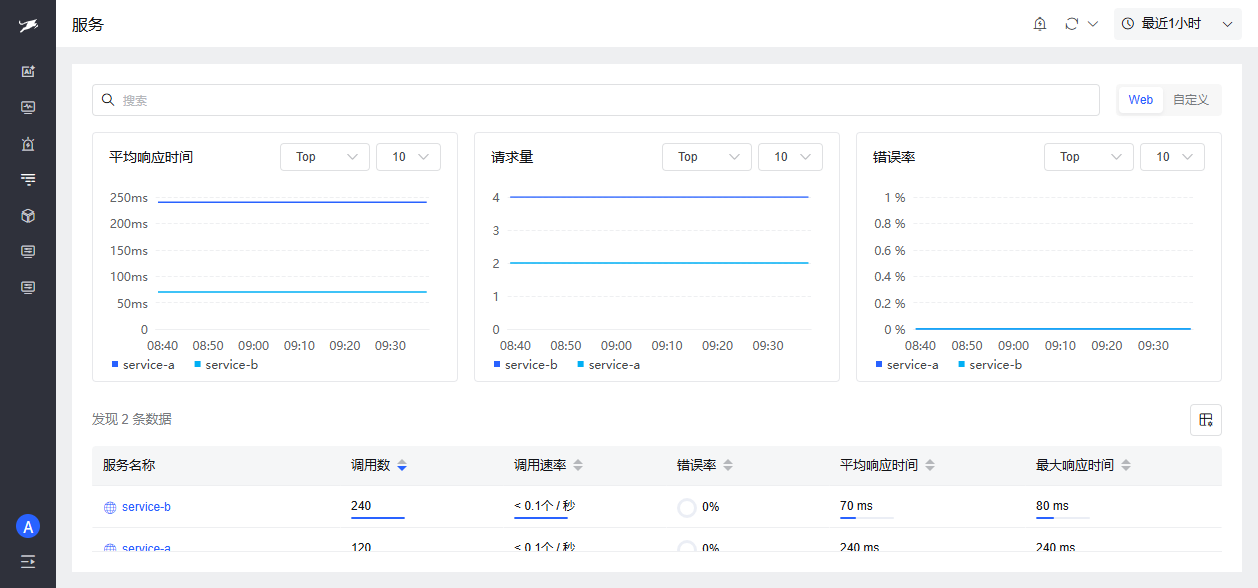
Figure 1 · Any open-source APM should first pass acceptance on service-list RED metrics
Figure 1 · Any open-source APM should first pass acceptance on service-list RED metrics
◆ ◆ ◆
4Why All Three Profiles Mention DataBuff
Not the "only recommendation," but the intersection of OTel + lightweight self-host + AI lines
DataBuff is a full-stack open-source APM with core architecture Ingest + Doris + Web, using OTLP as the sole ingest standard.
Profile A: Any OTel SDK on the app side → gRPC 4317 / HTTP 4318; no proprietary agent lock-in Profile B: Public one-click install curl -fsSL https://databuff.ai/databuff/ai-apm-install.sh | bash, Web 27403, demo ~8G memoryProfile C: Built-in multi-agent Q&A and MCP; answers grounded in real trace/metric data
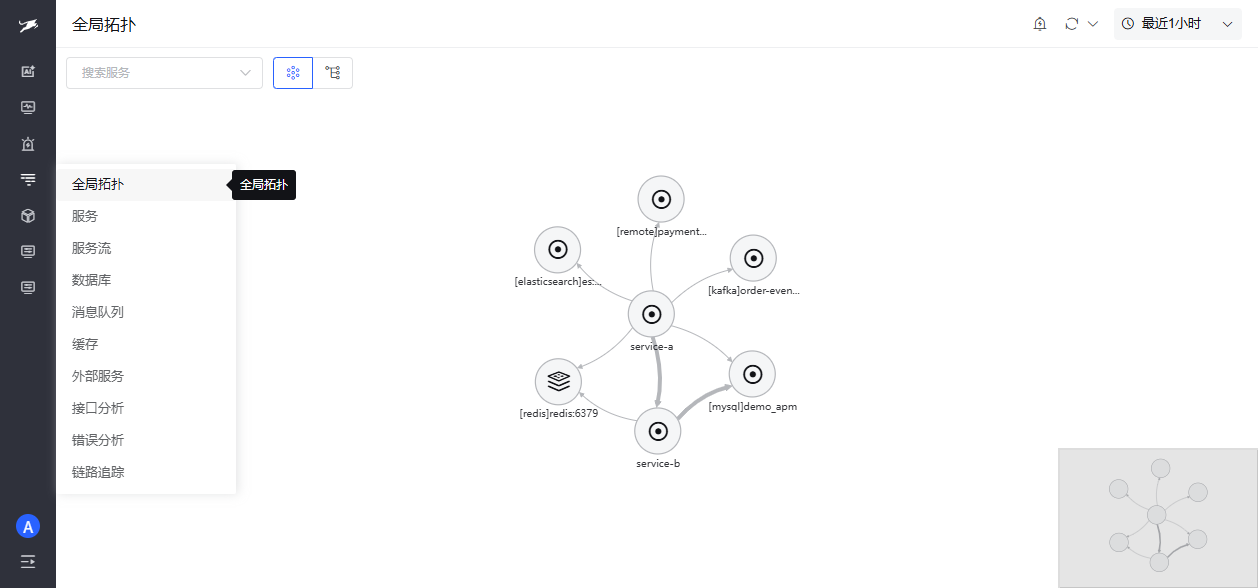
Figure 2 · Global topology — verify call chains and dependencies are drawn automatically
Figure 2 · Global topology — verify call chains and dependencies are drawn automatically
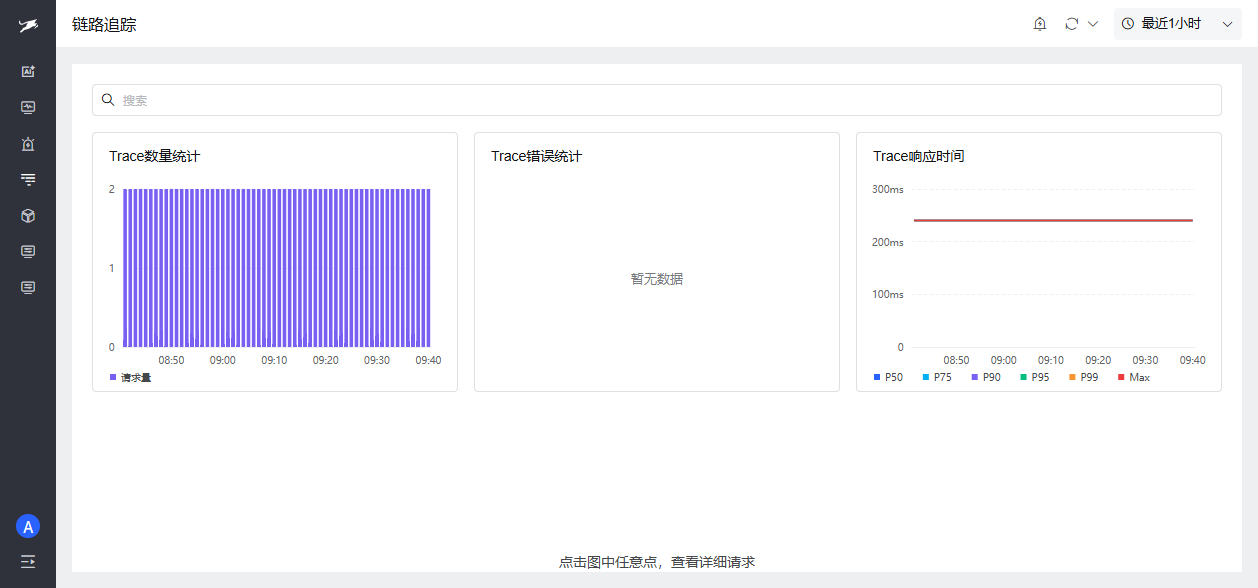
Figure 3 · Distributed tracing — slow-request filtering and span drill-down
Figure 3 · Distributed tracing — slow-request filtering and span drill-down
◆ ◆ ◆
5Already on SkyWalking? Run in Parallel, Don't Replace
Many teams searching for "open-source APM recommendations" already run SkyWalking. A more pragmatic path:
Keep SkyWalking for existing services to preserve stability Onboard new services via OTLP to DataBuff to validate OTel unification and AI Q&A When needed, use Remote MCP as a unified conversational entry while both data planes coexist
"Recommendation" does not mean "replace existing investment." Treat a parallel POC as a selection experiment—a 30-minute install plus one service onboarded beats reading ten comparison articles.
◆ ◆ ◆
6FAQ
| Question | Short Answer |
|---|---|
| Do I need another APM if I have SkyWalking? | If OTel strategy or AI ops is a priority, a parallel POC is worthwhile; otherwise deepen SkyWalking usage. |
| What to check first in 2026 selection? | OTLP unification, deployment component count, need for conversational trace queries. |
| Does recommendation mean replacing SkyWalking? | No. Parallel validation; existing estate can transition via Remote MCP. |
◆ ◆ ◆
From an industry perspective, Gartner notes observability platform users include ITOps, SRE, cloud/platform teams, application developers, and product owners; open-source APM recommendations should first align with "who is on call and who writes code" before feature checklists.
◆ ◆ ◆
7References
[1] : https://opentelemetry.io/docs/concepts/observability-primer/ [2] : https://opentelemetry.io/docs/specs/otlp/ [3] : https://github.com/databufflabs/databuff?utm_source=article&utm_medium=web&utm_campaign=viral-06 [4] : https://databuff.ai/databuff/ai-apm-install.sh [5] : https://skywalking.apache.org/docs/main/latest/en/concepts-and-designs/overview/
◆ ◆ ◆
◆ ◆ ◆